

Dual-energy X-ray Absorptiometry (DEXA or DXA)
Dual-energy X-ray Absorptiometry (DEXA or DXA) is a specialized imaging exam that uses very low-dose X-rays to measure bone density and body composition. It is used to diagnose osteoporosis, assess fracture risk, and detect early bone loss. DEXA scans also provide detailed measurements of fat and lean muscle distribution, supporting fitness, nutrition, and wellness goals.
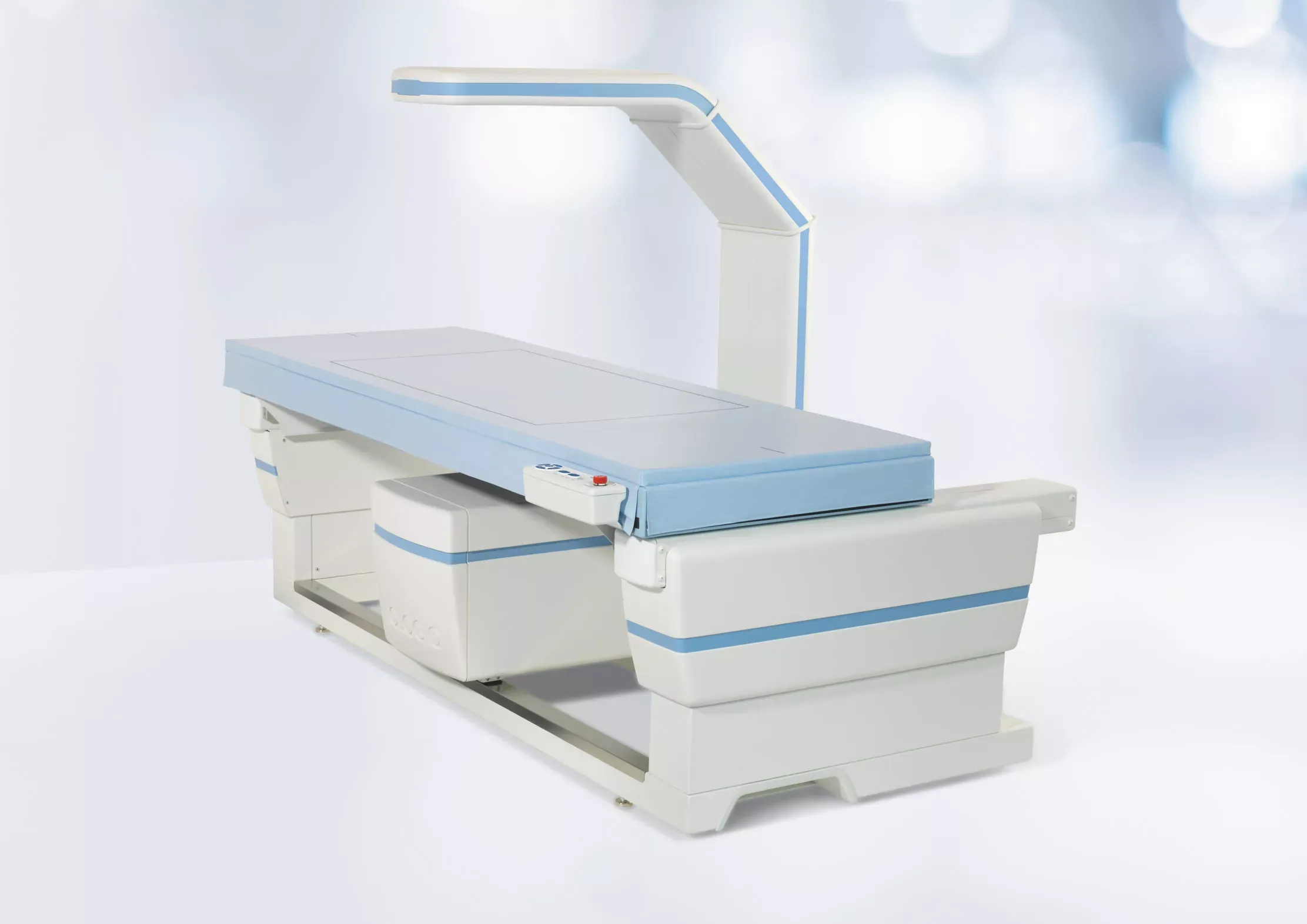
What to Expect
On Arrival
You’ll be greeted by one of our friendly technologists.
You will be asked to remove all metal items, but do not have to remove your clothing, provided it doesn't have zippers or other metal pieces.
The technologist will guide you to the examination room, where you will lie on a comfortably padded table. You will be asked to hold as still as possible.
During the Procedure
For a bone density scan, the arm of the scanner moves above you to scan your spine and hip, whereas for a body composition scan the arm of the scanner moves above you to scan your entire body. The scanner is open, and you will not be confined in any way.
For a bone density scan, the technologist will position you buy moving your arms to your side or by elevating your legs on a square cushion, whereas for a body composition scan, the technologist will position you by moving your arms to your side an flexing your feet up so that your toes are pointed towards the ceiling.
While for a bone density scan, the table may move at times, for body composition scans the table will move as the instrument passes over top of you seven different times.
After the Procedure
You can immediately return to normal activities.
Frequently Asked Questions
Mammography
Mammography is a specialized medical imaging exam that uses low-dose X-rays to create detailed images of breast tissue. It is used for both routine screening and diagnostic evaluation to help detect changes that may not be felt on physical exam. Mammograms help radiologists identify early signs of breast cancer as well as benign conditions such as cysts or calcifications. Modern digital and 3D mammography technology improves image clarity and detection while keeping radiation exposure low and patient comfort a priority.
Ultrasound
Ultrasound uses radio waves to create visual images called sonograms. While best known for its use during pregnancy, ultrasound is often used to view muscles, tendons, and many internal organs.

