

The Science Behind Lung Cancer
 When we think about lung cancer, smoking and screening are often the first things that come to mind. But there's much more to understand about this disease.
What actually happens inside the lungs when cancer develops? Why do some people develop lung cancer even if they've never smoked? What's the difference between the different types of lung cancer? And how do physicians determine whether cancer has spread?
November is Lung Cancer Awareness Month, making it an opportunity to take a closer look at one of the most significant cancer-related health challenges in the United States.
Understanding how lung cancer develops, what increases a person's risk, and how it affects the body can help patients and families better understand the disease and the role of medical imaging in diagnosis and treatment planning.
How common is lung cancer?
Lung cancer is one of the most commonly diagnosed cancers in the United States and remains the leading cause of cancer-related death.
According to the American Cancer Society's 2026 estimates:
- Approximately 229,410 new cases of lung cancer are expected in the United States.
- Approximately 124,990 deaths are expected from the disease.
- Lung cancer accounts for approximately 20% of all cancer deaths.
Although lung cancer is often associated with older adults, it can affect people at different ages. Most people diagnosed are 65 or older.
These numbers represent more than statistics. They reflect the many individuals and families whose lives are affected by lung cancer each year.
What actually is lung cancer?
Lung cancer develops when cells within the lungs become abnormal and begin growing and dividing uncontrollably.
Normally, the body regulates how cells grow, divide, and die. This process allows healthy tissue to maintain itself and replace damaged or aging cells.
Sometimes, however, changes in a cell's DNA disrupt these controls.
When this happens, abnormal cells may continue multiplying instead of following the body's normal growth cycle. Over time, these cells can accumulate and form a mass of tissue called a tumor.
Cancer cells can also invade surrounding tissues and, in some cases, spread through the bloodstream or lymphatic system to other parts of the body.
Lung cancer most commonly develops in the cells lining the airways or in the tissues of the lungs.
The two main types of lung cancer
Lung cancer is generally classified into two main categories based on how the cancer cells look under a microscope and how they behave.
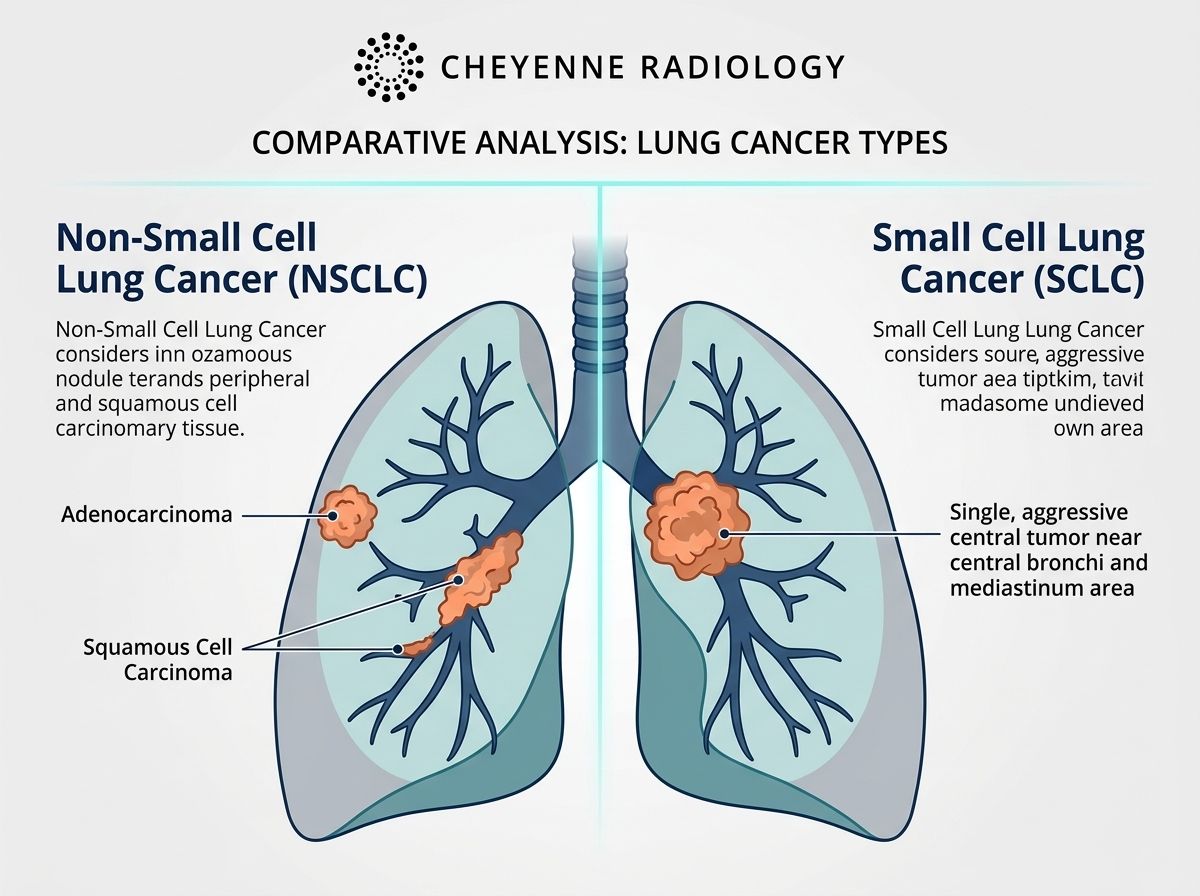
1. Non-small cell lung cancer (NSCLC)
Non-small cell lung cancer accounts for approximately 85% of lung cancer cases.
It includes several subtypes:
- Adenocarcinoma: The most common type of lung cancer. It often develops in the cells lining the small air sacs of the lungs and can occur in people who have never smoked.
- Squamous cell carcinoma: Usually develops in the cells lining the larger airways of the lungs and is strongly associated with smoking.
- Large cell carcinoma: A less common type that can develop in different areas of the lung and may grow and spread quickly.
2. Small cell lung cancer (SCLC)
Small cell lung cancer accounts for approximately 10–15% of lung cancer cases.
It is generally more aggressive than non-small cell lung cancer, with cancer cells that tend to grow and spread more rapidly.
Small cell lung cancer is strongly associated with cigarette smoking.
The distinction between these two types is important because they behave differently and may require different diagnostic and treatment approaches.
 ---
What causes lung cancer?
There isn't just one cause of lung cancer. The disease develops through changes in cells that can occur following exposure to certain cancer-causing substances or other risk factors.
Smoking is the leading risk factor, but it isn't the only one.
Here are some of the most recognized contributors.
Tobacco smoke
Cigarette smoking is the leading cause of lung cancer.
Tobacco smoke contains thousands of chemicals, including many known carcinogens. These substances can damage the DNA inside lung cells, increasing the likelihood of abnormal cell growth.
According to the CDC, cigarette smoking is linked to approximately 80% of lung cancer deaths in the United States.
The risk increases with the number of cigarettes smoked and the number of years a person smokes.
Quitting smoking reduces the risk over time, although former smokers can still develop lung cancer.
Radon exposure
Radon is a naturally occurring radioactive gas produced by the breakdown of uranium in soil and rock.
It can enter homes and buildings through foundations, cracks, and other openings.
Because radon is colorless, odorless, and tasteless, it cannot be detected without testing.
Long-term exposure to elevated radon levels increases the risk of lung cancer. Radon is the second leading cause of lung cancer in the United States after cigarette smoking.
Testing your home is the only way to determine whether radon levels are elevated.
Secondhand smoke
People who do not smoke can still be exposed to harmful chemicals through secondhand smoke.
Breathing in smoke from another person's cigarettes, cigars, or pipes exposes the lungs to many of the same cancer-causing substances found in tobacco products.
Long-term exposure increases the risk of lung cancer, including among people who have never smoked.
Occupational and environmental exposures
Certain workplace environments can expose individuals to substances associated with lung cancer.
Examples include:
- Asbestos
- Arsenic
- Chromium
- Nickel
- Beryllium
- Certain diesel exhaust and other industrial exposures.
Air pollution, particularly long-term exposure to fine particulate matter, is also associated with an increased risk of lung cancer.
Family history and other factors
Having a close relative with lung cancer may increase an individual's risk.
Previous radiation therapy involving the chest and certain underlying lung conditions may also contribute to risk.
Importantly, lung cancer can develop in people who have never smoked and have no obvious history of exposure to known risk factors.
Understanding these different contributors helps provide a more complete picture of lung cancer risk.
What happens inside the body as lung cancer develops?
To understand how lung cancer affects the body, it helps to understand the basic structure of the lungs.
The lungs contain a network of airways that branch into increasingly smaller passages called bronchi and bronchioles.
At the ends of these passages are millions of tiny air sacs called alveoli.
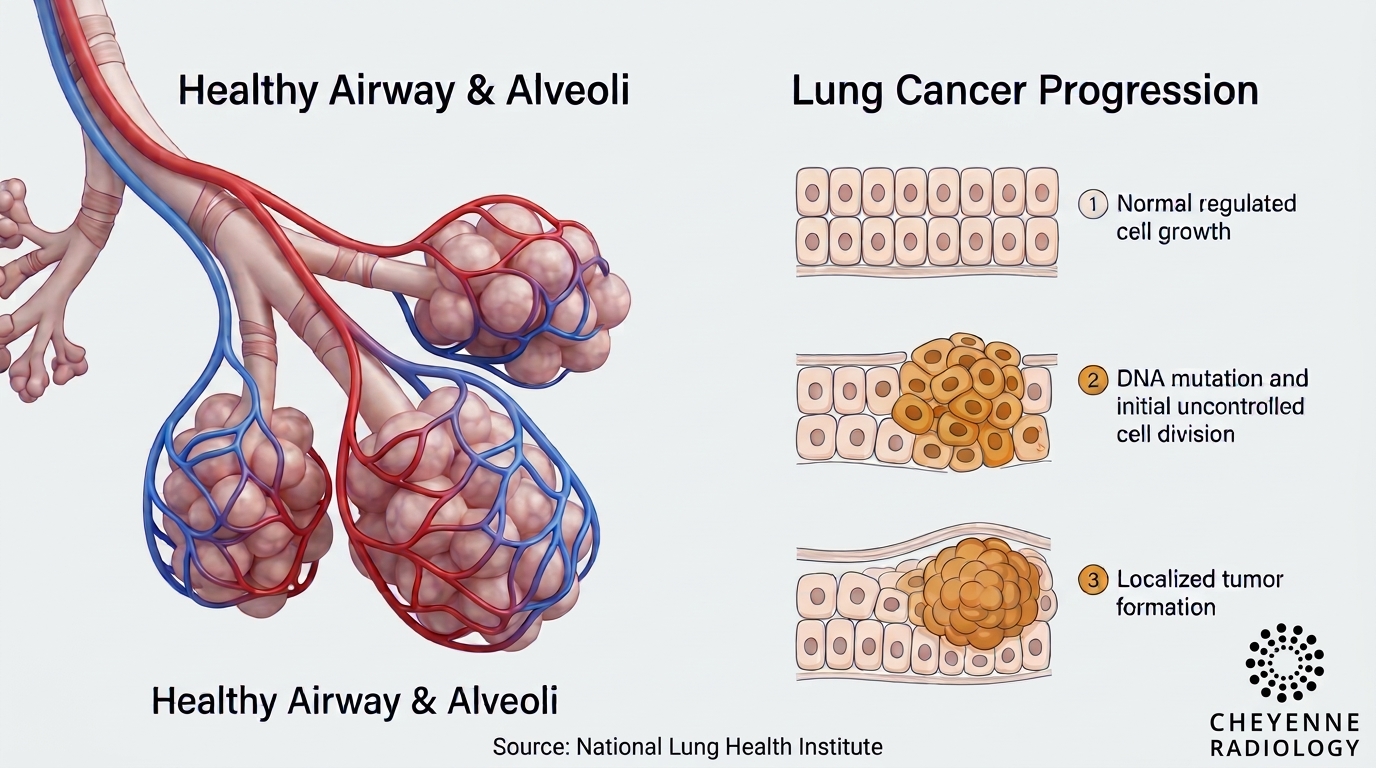 These air sacs are responsible for exchanging oxygen and carbon dioxide between the lungs and bloodstream.
When lung cancer develops, abnormal cells can grow within these tissues and gradually form tumors.
Depending on where a tumor develops, its size, and how it grows, it may begin affecting normal lung function or surrounding structures.
As cancer progresses, several things can happen:
- A tumor may grow within lung tissue.
- It may obstruct an airway, interfering with normal airflow.
- It may invade surrounding structures.
- It may involve nearby lymph nodes.
- Cancer cells may spread to distant organs.
Not every lung cancer follows the same progression. Different types can grow and spread at different rates.
What symptoms can lung cancer cause?
Early lung cancer may not cause noticeable symptoms.
As the disease progresses, symptoms can develop depending on the location and extent of the tumor.
These may include:
- A persistent cough or a cough that gets worse.
- Chest pain or discomfort.
- Shortness of breath.
- Wheezing.
- Coughing up blood.
- Hoarseness.
- Unexplained weight loss.
- Persistent fatigue.
- Difficulty swallowing.
Some symptoms may also occur when cancer spreads to other parts of the body.
For example, cancer involving the brain may cause headaches, vision changes, or neurological symptoms.
These symptoms can have many possible causes and do not automatically mean someone has lung cancer. However, persistent or concerning symptoms should be evaluated by a healthcare provider.
What does it mean when lung cancer spreads?
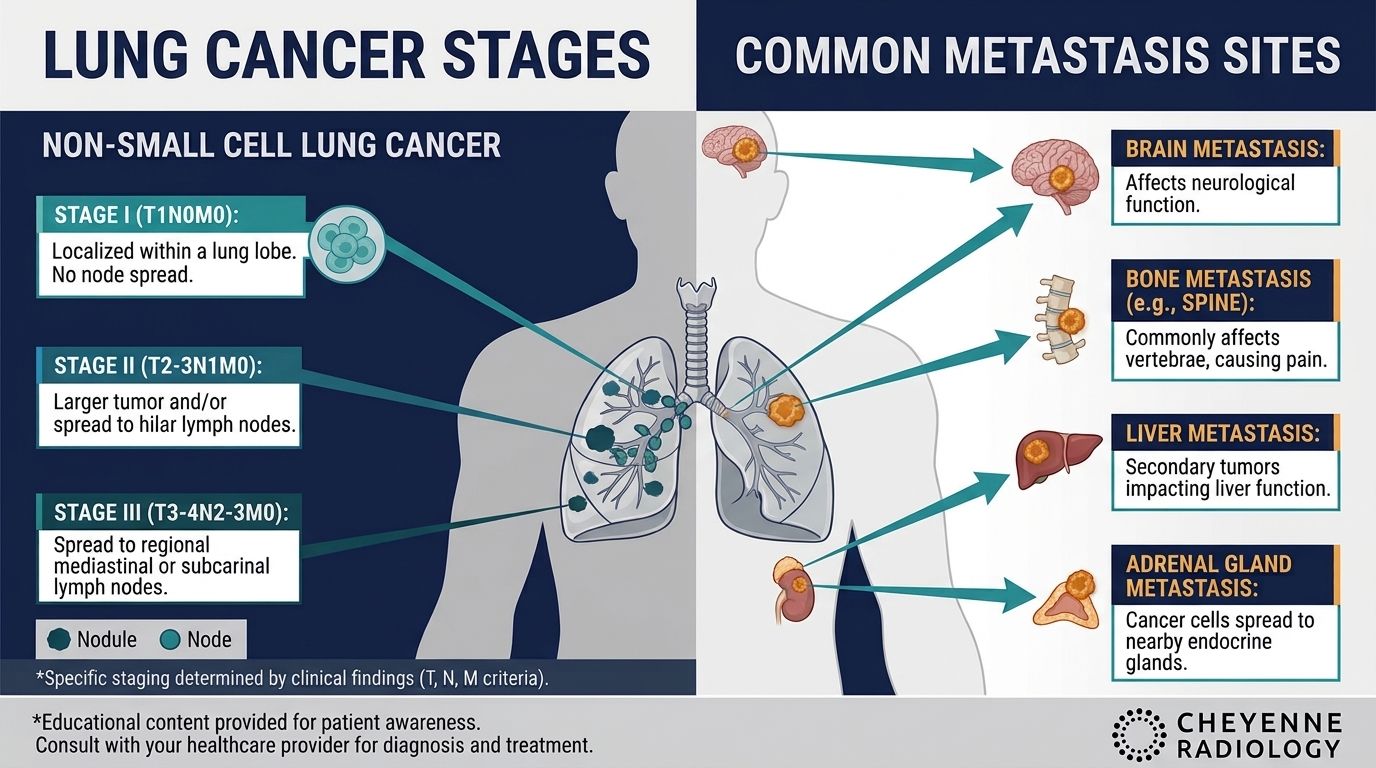
When cancer cells move from their original location to another part of the body, the process is called metastasis.
Cancer cells can spread through the lymphatic system or bloodstream.
For lung cancer, common sites of distant spread include:
- Brain
- Bones
- Liver
- Adrenal glands
One important distinction is that when lung cancer spreads to another organ, it is still considered lung cancer.
For example, if lung cancer spreads to the brain, it is called metastatic lung cancer rather than primary brain cancer.
This distinction matters because the type of cancer determines how physicians approach treatment.
Understanding lung cancer stages
When lung cancer is diagnosed, physicians need to determine how extensive the disease is.
This process is called staging.
Staging provides information about the size and location of the original tumor, whether nearby lymph nodes are involved, and whether cancer has spread elsewhere.
For non-small cell lung cancer, staging generally ranges from Stage I through Stage IV.
| Stage | General Description |
|---|---|
| Stage I | Cancer is localized within the lung and has not spread to nearby lymph nodes. |
| Stage II | Cancer may be larger or involve certain nearby lymph nodes or structures. |
| Stage III | Cancer has spread to regional lymph nodes or nearby structures within the chest. |
| Stage IV | Cancer has spread to distant parts of the body. |
Small cell lung cancer is often classified differently as limited-stage or extensive-stage disease.
Staging is important because it helps physicians understand the extent of the disease and determine appropriate treatment options.
How does medical imaging help identify and evaluate lung cancer?
Medical imaging plays an important role throughout the lung cancer care process.
Different examinations provide different types of information, helping physicians evaluate suspicious findings, determine the extent of disease, and monitor changes over time.
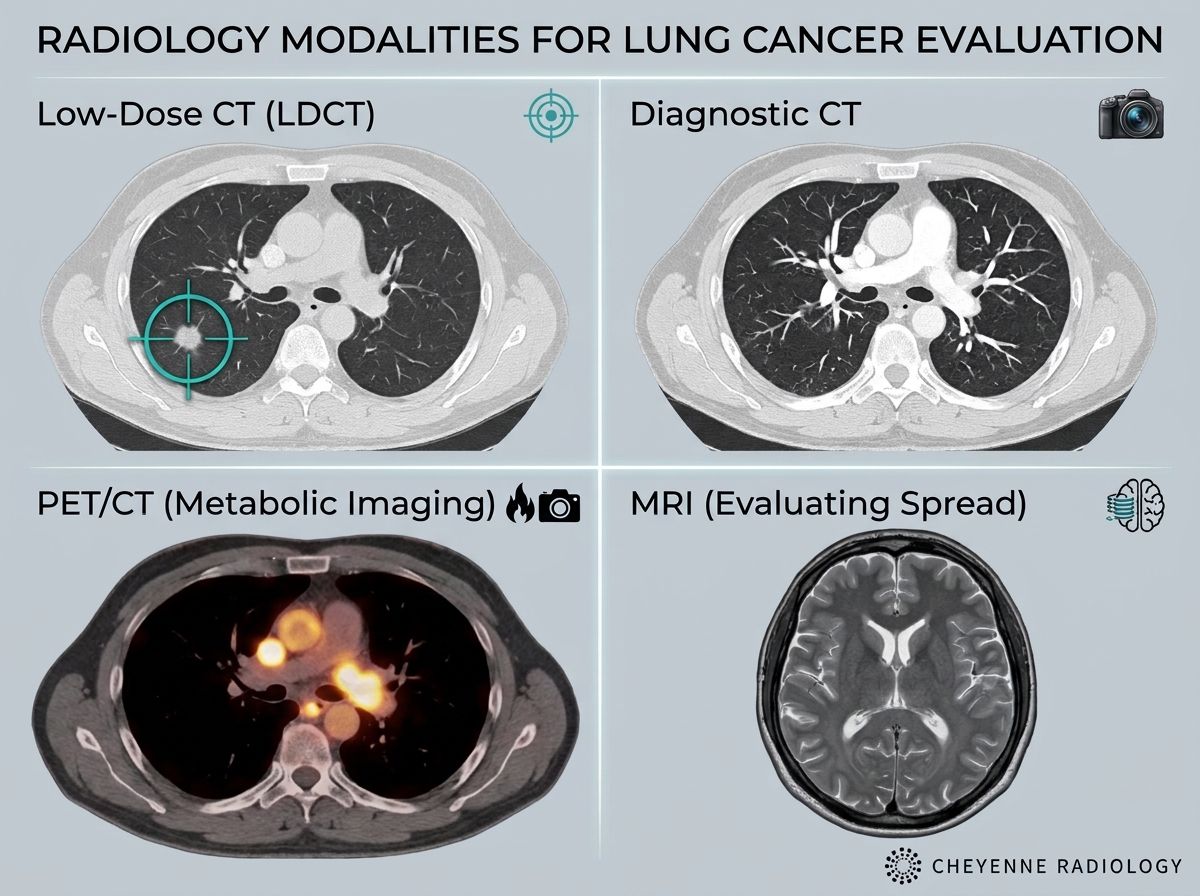
Low-dose CT (LDCT)
Low-dose CT is used to screen individuals who meet established high-risk criteria.
It creates detailed images of the lungs using a lower radiation dose than a standard diagnostic chest CT.
The goal is to identify suspicious abnormalities before symptoms develop.
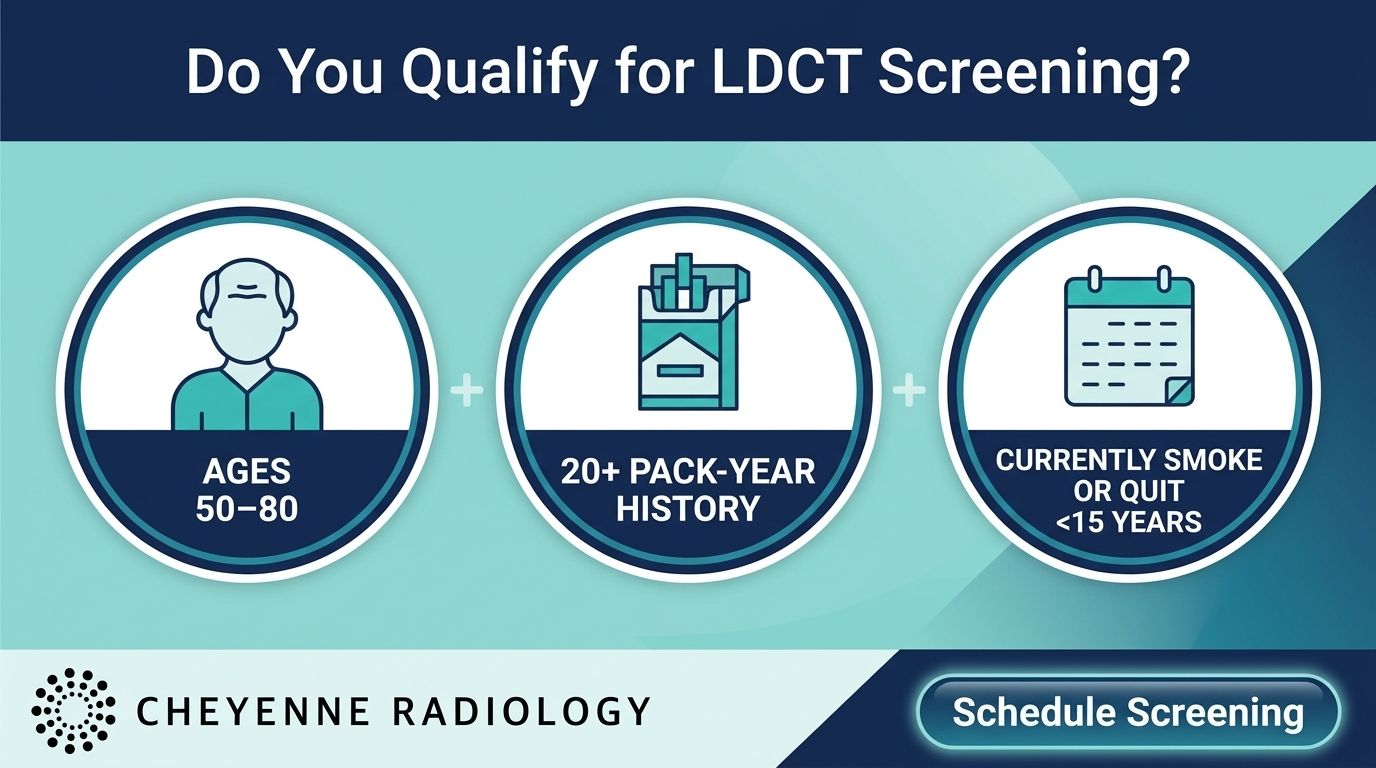
The U.S. Preventive Services Task Force recommends annual low-dose CT screening for adults ages 50–80 who have a smoking history of at least 20 pack-years and currently smoke or quit within the past 15 years.
A pack-year is equivalent to smoking an average of one pack of cigarettes per day for one year.
For example:
- One pack per day for 20 years = 20 pack-years.
- Two packs per day for 10 years = 20 pack-years.
Screening recommendations should be discussed with a healthcare provider to determine individual eligibility.
Diagnostic CT
A diagnostic CT examination provides detailed images of the lungs and surrounding structures.
It may be used when a patient has symptoms, when an abnormality is identified on another examination, or when physicians need additional information about a known tumor.
Depending on the clinical question, contrast material may or may not be used.
PET/CT
PET/CT combines two types of imaging:
- CT provides detailed anatomical information.
- PET provides information about metabolic activity within tissues.
Together, these images can help physicians evaluate suspicious areas and determine whether cancer may have spread to other parts of the body.
MRI
MRI uses magnetic fields and radio waves to produce detailed images of internal structures.
For patients with lung cancer, MRI may be used to evaluate certain areas of the body, particularly the brain, when physicians are assessing possible metastatic disease.
The role of biopsy
Although imaging can identify suspicious abnormalities and help determine the extent of disease, imaging alone does not always confirm cancer.
A biopsy involves collecting a tissue sample that can be examined under a microscope to determine whether cancer cells are present and identify the type of cancer.
A biopsy may be performed through bronchoscopy or with imaging guidance, depending on the location of the abnormality.
Imaging and pathology work together to provide physicians with important information needed to establish a diagnosis and plan treatment.
What happens after lung cancer is diagnosed?
Treatment depends on several factors, including:
- The type of lung cancer.
- The stage of the disease.
- The location and extent of the tumor.
- The patient's overall health.
- Specific characteristics of the cancer cells.
Treatment options may include surgery, radiation therapy, chemotherapy, targeted therapies, immunotherapy, or combinations of these approaches.
Imaging may also be used throughout treatment to evaluate how the cancer is responding and whether additional treatment is needed.
The care process often involves several healthcare professionals working together, including radiologists, oncologists, pulmonologists, surgeons, and other specialists.
Why lung cancer screening matters
Although this article has focused on understanding lung cancer as a disease, screening remains an important part of the conversation.
Low-dose CT screening can identify suspicious abnormalities in eligible high-risk individuals before symptoms develop.
For people who meet the screening criteria, annual screening can provide an opportunity to identify lung cancer at a more localized stage.
 It is important to remember that screening is not the same as diagnostic imaging. Screening is intended for individuals without symptoms who meet the eligibility criteria. People experiencing concerning symptoms should seek medical evaluation rather than wait for a screening examination.
Knowledge is an important part of your health
Lung cancer is a complex disease, and understanding it involves much more than knowing that smoking increases risk or that screening is available.
It involves understanding how cells change, how tumors develop, how cancer spreads, and how medical imaging helps physicians evaluate what is happening inside the body.
At Cheyenne Radiology Group, we're committed to exceptional, patient-centered imaging with compassion, clarity, and comfort.
We believe that helping our community understand medical imaging and the conditions it helps evaluate is an important part of supporting better-informed healthcare decisions.
This November, take the time to learn more about your lung health.
Medical disclaimer: This article is intended for general educational purposes and does not replace professional medical advice, diagnosis, or treatment. Speak with your healthcare provider about symptoms, individual risk factors, and screening eligibility.
References
- American Cancer Society – Key Statistics for Lung Cancer (2026 estimates).
- CDC – Lung Cancer Basics
- CDC – Lung Cancer Risk Factors
- CDC – Reducing Risk for Lung Cancer
- National Cancer Institute – Lung Cancer
- National Cancer Institute – Non-Small Cell Lung Cancer Treatment and Staging
- National Cancer Institute – Small Cell Lung Cancer
- RadiologyInfo.org – Lung Cancer: Diagnosis and Treatment
- U.S. Preventive Services Task Force – Lung Cancer Screening Recommendations
The 3 Imaging Screenings Every Woman Should Know About after 40
How preventive imaging supports early detection, long-term health, and confident healthcare decisions.
How do you know you can trust your Imaging Center?
If you’re not a medical expert, it can be difficult to judge the quality of an imaging center—how can you be sure the one you’re choosing is one of the best?