

Imaging for Kids: What Parents Should know about X-rays, CTs, MRIs and Ultrasounds file
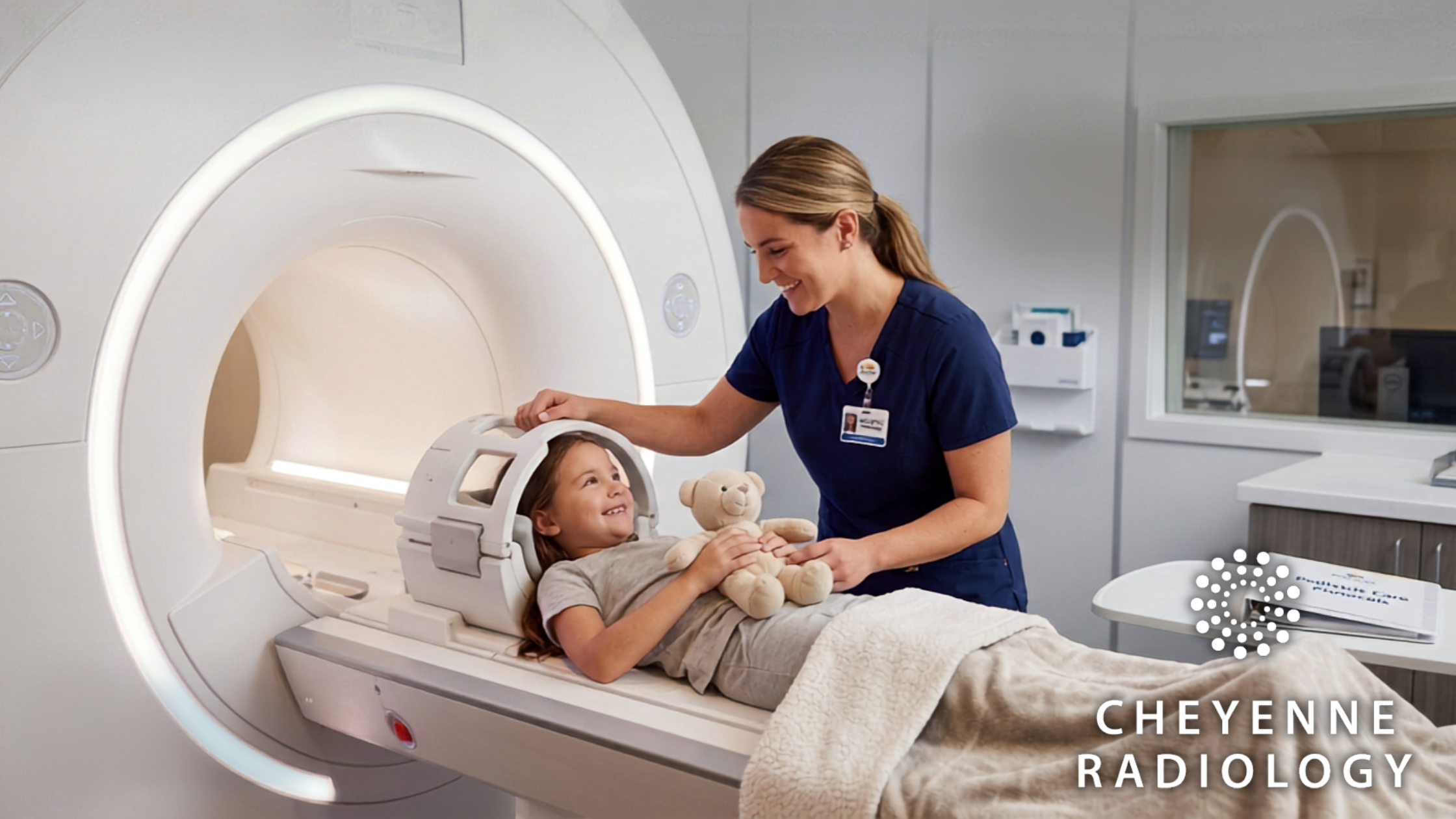
Back-to-school season brings new routines, new activities—and sometimes a few unexpected bumps, bruises and medical appointments. Whether your child is heading into kindergarten, middle school or their first year of high school, parents want to know that when imaging is recommended, it is both necessary and as safe as possible.
Hearing that your child needs an X-ray, CT scan, MRI or ultrasound can naturally bring questions:
Does my child really need this test? Is the radiation safe? Why can't we use an ultrasound instead? Will my child be scared? Will they have to stay still?
These are good questions. Understanding how pediatric imaging works can make the experience less intimidating for both you and your child.
The most important thing to know is that children are not simply treated as small adults when it comes to medical imaging. Their size, age, developmental stage and ability to cooperate with an exam can all influence how an imaging study is performed.
At a quality imaging facility, the goal is straightforward: get the information the physician needs while using the most appropriate imaging method and, when radiation is involved, the lowest reasonable dose necessary to produce a diagnostic image.
Let's look at what that means—and what parents should know before their child's next imaging appointment.
Why Do Children Need Specialized Imaging?
Children's bodies are constantly growing and changing. Their anatomy is different from an adult's, and those differences matter when medical imaging is performed.
Radiation sensitivity is another important consideration. According to the U.S. Food and Drug Administration (FDA), children are more sensitive to radiation than adults, and their longer expected lifetime means there is more time for potential effects of radiation exposure to appear. That's one reason imaging protocols should be adjusted specifically for pediatric patients rather than simply using settings designed for adults. FDA, Pediatric X-ray Imaging.

In other words, one size does not fit all.
A child's imaging exam may be adjusted based on factors such as:
- Age and body size
- The part of the body being examined
- The reason for the exam
- The type of imaging technology being used
- How well the child can remain still
- Whether contrast material is needed
- Whether sedation or anesthesia may be necessary
These considerations are especially important for exams involving ionizing radiation, such as X-rays and CT scans. The goal isn't simply to produce an image. It is to produce a useful diagnostic image while avoiding unnecessary exposure.
The American College of Radiology and Radiological Society of North America explain that pediatric imaging should be appropriately tailored to a child's size and weight.
What does "pediatric imaging" actually mean?
It doesn't necessarily mean that your child needs to visit a children's hospital or a special pediatric-only imaging center.
It means the imaging team understands that children may require different approaches than adults.
For example, an X-ray technique that is appropriate for an adult may not be appropriate for a young child. The technologist may select different exposure settings, positioning techniques or equipment configurations based on the child's size and the area being examined.
The experience matters, too.
A four-year-old who is nervous about a new machine may need a very different approach than a 15-year-old who simply wants the exam to be over so they can get back to school.
That is where the human side of radiology becomes especially important.
The ALARA Principle: Keeping Radiation As Low As Reasonably Achievable
If your child's doctor recommends an X-ray or CT scan, you may immediately think about radiation. That concern is understandable.
X-rays and CT scans use ionizing radiation to create images. But that doesn't mean these exams are inherently unsafe. When medically necessary, the diagnostic benefit of an appropriately performed exam generally outweighs the small potential risk associated with radiation exposure.
Radiology professionals follow an important safety concept known as ALARA.
ALARA stands for "As Low As Reasonably Achievable."
The principle means that radiation exposure should be minimized while still obtaining the diagnostic information needed.
For children, that means considering:
Is the exam necessary? If imaging can help answer an important medical question, the potential benefit needs to be weighed against the small radiation risk.
Is there an alternative? Depending on the clinical question, ultrasound or MRI may sometimes provide the information needed without ionizing radiation.
Can the imaging protocol be adjusted? Absolutely. Pediatric imaging protocols can be tailored to the child's size, anatomy and clinical situation.
Does the entire body need to be scanned? The area being examined should be limited to what is necessary to answer the clinical question.
The FDA specifically recommends that pediatric X-ray imaging—including CT—use the lowest radiation dose necessary while taking the child's size and age into account.
Does an X-ray stay in my child's body?
No.
One common misconception is that radiation somehow remains in the body after an X-ray. It doesn't. Once the X-ray exposure ends, there is no radiation remaining in your child's body from a conventional X-ray exam. CT uses X-rays as well, but similarly does not leave radiation behind.
The important safety question isn't whether radiation remains in the body—it is whether the imaging exam is medically appropriate and performed using an optimized technique.
What can parents do?
Parents can help by keeping track of their child's previous imaging studies and letting the referring physician know about recent exams.
This doesn't mean that children should never have another X-ray simply because they have had one before. Sometimes repeat imaging is medically necessary. But knowing what imaging has already been performed can help the healthcare team make informed decisions.
The FDA recommends that parents keep a record of their child's medical imaging history and discuss the benefits, risks and alternatives with the referring provider when a new exam is recommended.
Choosing the Right Imaging Test
One of the most confusing parts of medical imaging for parents is understanding why one test is recommended instead of another.
If an ultrasound doesn't use radiation, for example, why not use ultrasound for everything?
The answer is that different imaging technologies answer different questions. Think of them as different tools in a toolbox. The best tool depends on what your child's physician and radiologist need to see.
X-ray: Fast, Simple and Excellent for Bones
When most people hear "medical imaging," they probably picture an X-ray.
A fall on the playground.
A collision during soccer practice.
A wrist injury during gymnastics.
A suspected fracture after a bike accident.
These are situations where an X-ray may be an appropriate first imaging test.

X-rays are particularly useful for evaluating bones and are frequently used when a child has experienced an injury.
X-rays can also be used to evaluate the chest and certain abdominal conditions, among other applications. According to RadiologyInfo, pediatric X-rays may help evaluate fractures, dislocations, chest conditions, foreign objects and other medical concerns.
What should your child expect?
A typical X-ray is quick and painless.
Your child may be asked to stand, sit or lie in a particular position. The technologist may need them to hold still briefly while the image is taken. For younger children, this can sometimes be the hardest part.
The good news? [The actual exposure is typically extremely brief.]{.text-primary}
And because children move, pediatric technologists often spend as much time explaining and positioning as they do taking the image.
Ultrasound: Imaging Without Radiation

Ultrasound uses sound waves rather than X-rays to create images.
That means ultrasound does not use ionizing radiation and is considered safe when appropriately performed.
Ultrasound can be particularly useful for looking at certain soft tissues and organs and is commonly used for areas such as the abdomen, pelvis and other structures that can be effectively evaluated using sound waves.
For children, ultrasound can be an especially useful option when it can answer the medical question without radiation.
What does an ultrasound feel like?
A technologist applies gel to the skin and moves a small handheld device called a transducer over the area being examined. The gel may feel cold. The transducer may require some pressure, particularly if the technologist needs to obtain images of a particular structure.
But there is no radiation, and there is typically no enclosed machine.
For an anxious child, that can make ultrasound a much less intimidating experience.
MRI: Detailed Images Without Radiation
MRI—or magnetic resonance imaging—uses a powerful magnetic field, radio waves and a computer to create detailed images.
MRI does not use X-rays or ionizing radiation.
MRI can be particularly valuable when physicians need detailed images of soft tissues, the brain, spinal cord, joints, muscles and other structures.
For example, MRI may be considered when evaluating certain sports injuries or conditions involving the brain and spine.
But MRI comes with its own challenge: Your child has to stay still. Very still.
The scan can also be noisy, and the machine has a tunnel-like opening that some children may find intimidating. For a child who is nervous about enclosed spaces, preparation can make a significant difference.
Some facilities allow or encourage parents to explain the MRI beforehand in age-appropriate language. Children may benefit from knowing what the machine will sound like, how long they need to remain still and what they can expect during the exam.
In some circumstances, sedation or anesthesia may be considered, particularly for children who cannot remain still long enough to obtain useful images. That decision is made based on the child's age, medical needs and the specific examination.
CT: Fast, Detailed Imaging When Every Second Can Matter
CT, or computed tomography, uses X-rays to create highly detailed cross-sectional images of the body.
Unlike a conventional X-ray, which produces a relatively flat image, CT can create detailed images that allow physicians to examine bones, organs, blood vessels and soft tissues from multiple perspectives.
One of CT's biggest advantages is speed.
That's especially important in emergency situations.
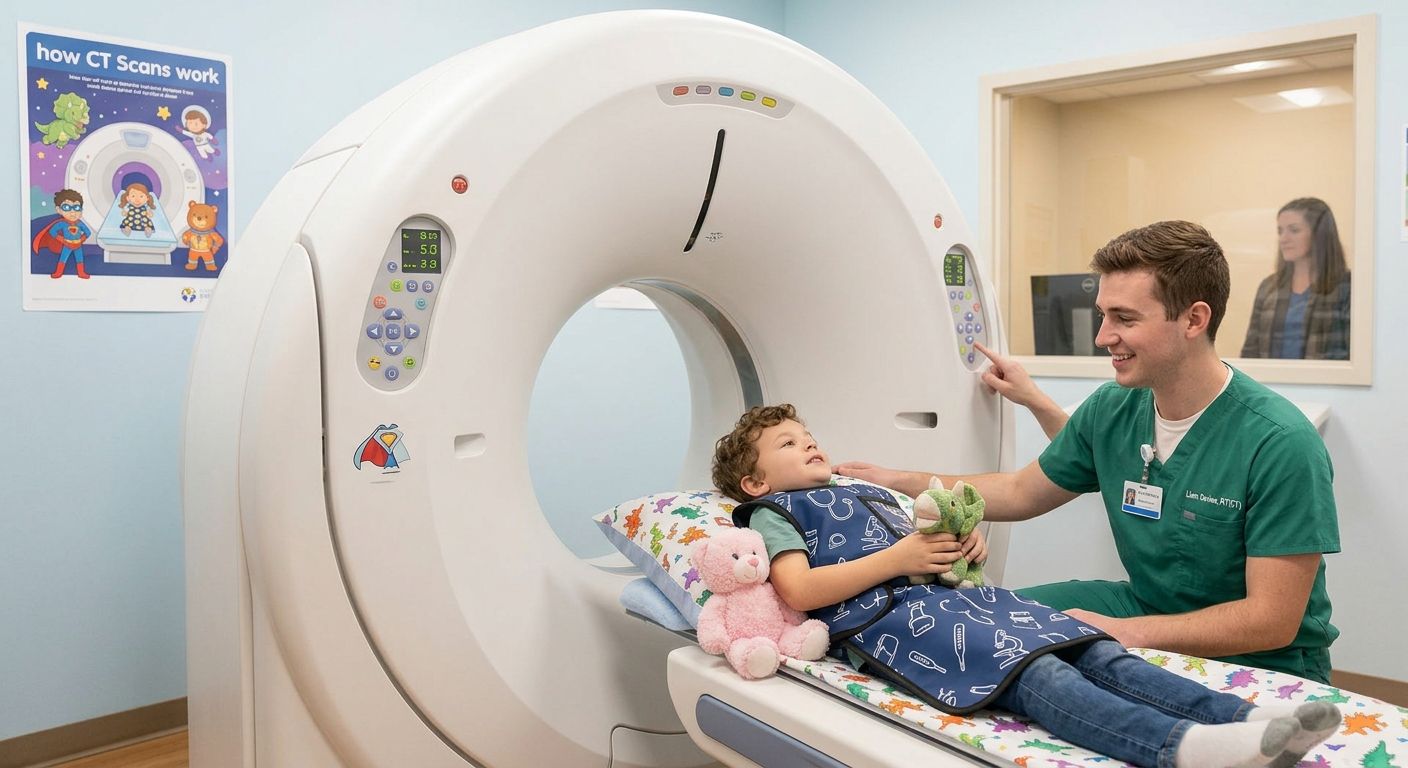
For example, after significant trauma, CT may provide important information quickly about internal injuries.
Because CT uses radiation, pediatric CT requires particular attention to dose optimization. The FDA recommends that CT in children be performed when medically necessary and that exposure settings be appropriately adjusted for pediatric patients.
CT isn't automatically "better" than X-ray, MRI or ultrasound.
It's simply another tool—one that can provide information that may not be available through other imaging methods.
So Which Test Is Best?
There isn't one universal answer.
The right choice depends on the medical question.
| Imaging Exam | Uses Radiation? | What It May Be Best For |
|---|---|---|
| X-ray | Yes | Bones, fractures, chest and certain other conditions |
| Ultrasound | No | Certain organs, soft tissues and fluid-filled structures |
| MRI | No | Brain, spine, joints and detailed soft-tissue imaging |
| CT | Yes | Detailed, rapid imaging of bones, organs, blood vessels and trauma |
Sometimes an X-ray is exactly what is needed. Sometimes ultrasound can provide the answer without radiation. Sometimes MRI provides the level of soft-tissue detail needed. And sometimes CT is the most appropriate way to quickly evaluate a potentially serious injury.
The goal is not to choose the test with the least technology or the least radiation at all costs.
The goal is to choose the right test for the right clinical question.
Helping Kids Feel Comfortable During an Imaging Exam
Even when an imaging exam is painless, a new environment can be intimidating for a child.
There are unfamiliar machines.
There may be bright lights, strange noises and people wearing medical clothing. And then someone may ask your child to "hold still"—which can be a surprisingly big request for a four-year-old.
Fortunately, parents and imaging technologists can work together to make the experience easier.
Before the appointment: Keep the explanation simple
You don't need to give your child a detailed medical lecture.
Instead, explain what will happen using language they understand.
For example:
"We're going to the imaging center so they can take pictures of your arm and see how your bones are doing."
For an MRI:
"You'll lie on a bed that moves into a big camera. It will make some loud noises, but it won't hurt you."
Avoid promising that an exam will be "easy" if you aren't sure. If your child discovers that something feels uncomfortable or strange, they may feel that they weren't prepared. Instead, focus on what they can expect.
Let the technologist be your child's guide
Radiologic technologists work with patients of all ages, and communication is an important part of their job. A good technologist can explain what is happening, demonstrate equipment and give a child time to get comfortable.
For younger children, that might mean:
- Explaining the exam in kid-friendly language
- Showing the child the equipment before beginning
- Giving simple instructions one step at a time
- Allowing a child to ask questions
- Offering reassurance throughout the exam
- Using distraction or conversation when appropriate
- Giving the child positive feedback for cooperating
Sometimes something as simple as saying, "You're doing a great job holding still," can make a big difference.
Back-to-School Injuries: When Imaging May Become Part of the Routine
Back-to-school season often means a return to sports, playgrounds, physical education and extracurricular activities.
That means more opportunities for bumps, falls and injuries.
If your child experiences an injury, imaging may or may not be necessary. A healthcare provider will consider the child's symptoms, physical examination and circumstances of the injury when deciding whether imaging could provide useful information.
For suspected fractures, X-rays are commonly used because they provide useful images of bones quickly and are widely available.
If your child participates in sports, it's also worth remembering that not every sports injury requires an X-ray or MRI. Sometimes rest, observation and a clinical evaluation are appropriate. Other times, imaging can help identify an injury that isn't apparent from the outside.
The important thing is to let the healthcare provider determine what information is needed rather than assuming that more imaging is always better.
A Parent's Guide to Asking Questions
If your child's physician recommends an imaging exam, don't be afraid to ask questions. You don't need to be an imaging expert.
A few straightforward questions can help you understand the recommendation:
"What are you looking for with this exam?" This helps you understand the clinical question the imaging is intended to answer.
"Why is this the best type of imaging?" There may be a good reason your physician chose an X-ray rather than an ultrasound—or an MRI rather than a CT.
"Does this exam use radiation?" X-rays and CT use ionizing radiation. Ultrasound and MRI do not.
"Is the imaging protocol adjusted for children?" Pediatric patients should have imaging protocols appropriately tailored to their size and the specific exam.
"Has my child had similar imaging recently?" If so, let the healthcare team know. Previous imaging may provide useful information and can help the care team determine whether another examination is necessary.
"What can I do to help my child prepare?" Your imaging team can often tell you what your child should expect and whether there are any special preparation instructions.
The Bottom Line for Parents
When your child needs medical imaging, it's natural to have concerns—especially when the word "radiation" enters the conversation.
But pediatric imaging is designed with those concerns in mind.
Children's size and developmental needs matter. Imaging protocols can be adjusted. Radiation exposure can be minimized when radiation-based exams are medically necessary. And when ultrasound or MRI can appropriately answer the clinical question, those technologies offer imaging options without ionizing radiation.
Perhaps most importantly, your child's experience matters, too.
A radiology exam isn't just about the technology. It's about the people operating that technology and caring for the patient.
From a technologist explaining an X-ray to a nervous kindergartener, to a parent helping a teenager prepare for an MRI, small steps can make a medical appointment feel much less overwhelming.
As families head back to school, back to sports and back to busy routines, knowing what to expect can make all the difference.
And if your child does need imaging, remember:
Ask questions. Understand the purpose. Know what to expect. And work with your child's healthcare and imaging team to choose the approach that provides the information needed while keeping your child safe and comfortable.
Trusted Resources for Parents
For additional information about pediatric imaging and radiation safety, parents can explore these resources:
- FDA — Pediatric X-ray Imaging — Information about pediatric radiation sensitivity, dose optimization and questions parents can ask.
- RadiologyInfo.org — Radiation Safety for Children — Patient-friendly information reviewed by experts from the American College of Radiology and Radiological Society of North America.
- RadiologyInfo.org — Pediatric X-ray — What parents can expect during a pediatric X-ray.
- RadiologyInfo.org — Pediatric MRI — Information about how MRI works and what children can expect.
- RadiologyInfo.org — Pediatric CT — Information about CT, including pediatric radiation considerations.
Sources
- U.S. Food and Drug Administration. Pediatric X-ray Imaging. Discusses children's increased sensitivity to radiation, pediatric-specific imaging settings and the ALARA principle.
- RadiologyInfo.org, American College of Radiology and Radiological Society of North America. Radiation Safety for Children. Covers pediatric radiation safety, imaging alternatives and the importance of tailoring imaging to a child's size and weight.
- RadiologyInfo.org. Pediatric X-ray. Provides information about common pediatric X-ray applications, benefits, risks and what children can expect.
- RadiologyInfo.org. Pediatric CT. Covers CT applications, benefits and pediatric dose considerations.
- RadiologyInfo.org. Pediatric MRI. Covers MRI uses in children, the absence of ionizing radiation and considerations such as remaining still and sedation.
- U.S. Food and Drug Administration. Computed Tomography (CT). Provides guidance regarding the appropriate use and dose optimization of CT in children.